

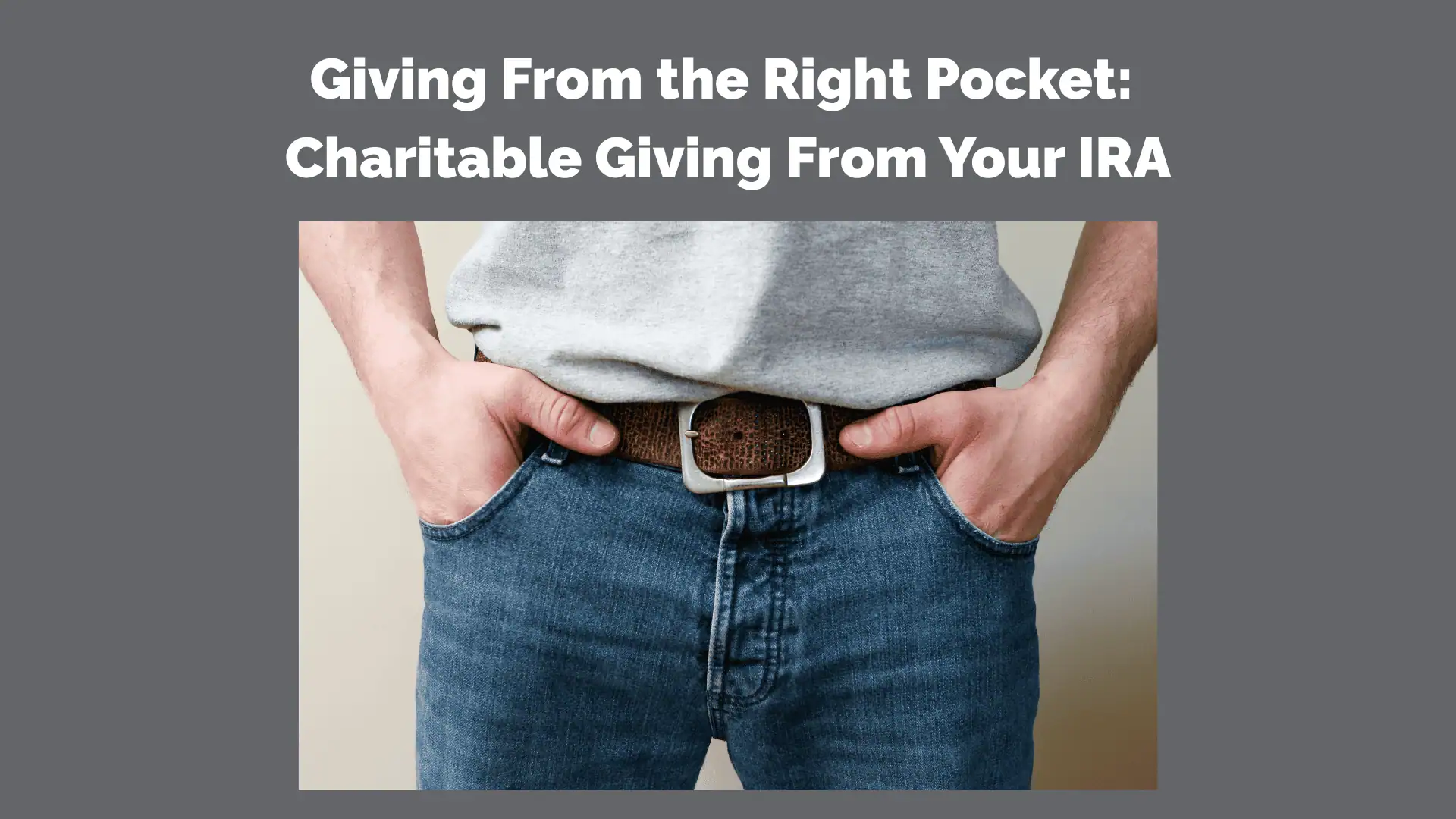
Giving From the Right Pocket: Charitable Giving From Your IRA
When supporting a charity or nonprofit organization that matters to you, choosing how to make your gift can be just as important as deciding how much to give.
For individuals over age 70½, a Qualified Charitable Distribution (QCD) allows funds to be transferred directly from an IRA to an eligible charitable organization. Recent tax law changes make understanding this charitable giving option particularly timely.
ACTEC Fellow Professor Christopher (Chris) Hoyt explains:
“Tax law changes increased the tax savings that donors over age 70½ have from making their charitable gifts with Qualified Charitable Distributions (QCDs) from their IRAs. Beginning in 2026, taxpayers who claim itemized deductions must reduce the amount of their charitable income tax deduction by 0.5% of their adjusted gross income. There is no such reduction for QCDs. The entire QCD gift produces tax savings.”
The ACTEC Foundation has resources to help individuals and their advisors understand how charitable giving from an IRA works and when it may be appropriate. In a short video, Hoyt explains QCDs and some of the potential tax advantages of giving directly from an IRA.
For those considering a gift to The ACTEC Foundation or another charitable organization, it may be worth considering not only how much you want to give, but which “pocket” you give it from.
Get the 3rd Edition of Engagement Letters FREE including sample letters in Word & PDF.

Latest ACTEC Trust and Estate Talk Podcasts
Should Lawyers Serve as Trustees? What to Consider Before Saying Yes
Lawyers serving as trustees face unique ethical, fiduciary and liability considerations. Learn what to consider before accepting the role.
Divorce and Estate Planning: Key Considerations Before the Divorce Is Final
Learn key estate planning considerations before a divorce is final, including wills, beneficiary designations, trust assets, fiduciaries, and asset protection.
Testamentary and Lifetime Planning for the Married Couple: Creating a Lasting Legacy for Their ‘Love Story’
Explore ethical considerations, client representation, portability, and marital deduction issues when estate planning for married couples.